


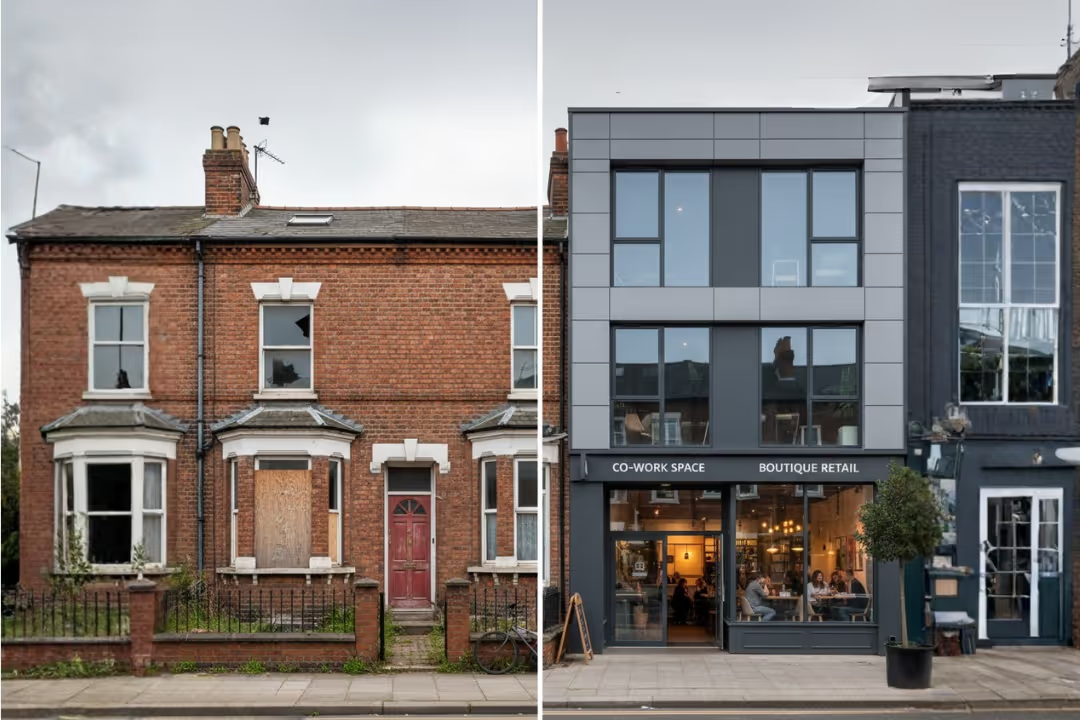
Moving from residential to commercial property is a change in scale and discipline. The basics of analysing and managing a project stay the same, but how value, risk and funding work is different. For those used to residential BTL metrics or refurbishment projects, the commercial sector needs a bigger focus on income stability, occupier profiles, planning policy and long term asset positioning. Getting this right is what makes commercial projects perform consistently.
Start with planning
The recent reclassification of use classes has made much of the high street more adaptable. The 2020 introduction of Class E combines many types of commercial uses into one category, making it easier for buildings to be used more flexibly and keep local areas active. That flexibility creates opportunity, especially for developers looking for mixed income or conversion potential.
However, some councils have introduced Article 4 directions that remove permitted development rights in specific areas. This means what looks like a simple conversion might actually need full planning permission. Always check local policy maps and recent planning decisions before committing to a deal.
Align with market demand
Commercial property performance is now very sector specific. Office space is still adapting to hybrid working, with demand shifting towards smaller, more flexible layouts. Meanwhile, logistics and light industrial assets stay strong and are supported by online shopping and changing supply chains. Retail is slowly recovering, especially in local high streets and small everyday use stores like supermarkets and corner shops. Each subsector has its own rental setup, return potential, and level of risk. For developers transitioning from residential,
it’s important to base your numbers on real market demand rather than broad trends. Using the same assumptions for every property type can lead to wrong pricing and unrealistic returns.
Prioritise energy efficiency and compliance
Energy performance now plays a big role in a property’s value and how easily it can be financed.The Minimum Energy Efficiency Standards (MEES) already stopped new leases on properties rated below EPC E, and government plans to raise this minimum to a B rating later this decade. Not complying can limit your exit options, affect valuation and make refinancing difficult. Any business plan should therefore include an EPC improvement strategy with realistic capex allowances for insulation, HVAC upgrades and lighting.
Recognise the differences in financing
Commercial lending is very different from residential finance. Lenders assess the strength of the underlying income, tenant covenants, lease length and location demand before looking at your personal experience. For owner-occupiers, lenders look at how well the business performs and whether it can keep up with repayments. For redevelopment or conversion schemes, lenders want proof that the planning is realistic, the design meets noise and light standards and the build costs are accurate. Adding a short planning overview and your EPC improvement plan to the application can help save time.
Getting finance for commercial projects is more about being prepared and clear with your plans rather than speed of application
The tactical approach
Plan your project with two clear exit options from the start. Plan for two outcomes, one where you keep the property for rental income and another where you change its use through planning to increase value. For example, you could keep the shops on the ground floor as Class E tenants and convert the upper floors to residential under Class MA, subject to natural light and noise compliance. Get quotes for EPC improvements before you exchange so you know the true cost upfront. If a project is only viable under perfect conditions, it’s rarely the right deal. In commercial property, success comes from being flexible and realistic.
Do due diligence
Due diligence for commercial purchases goes beyond standard searches. Look at whether the building sits in an Article 4 area, a conservation zone or a flood zone. Ask the duty planner about any recent prior approval refusals nearby and why they were rejected.
Get reports that cover only what’s relevant to your project, things like contamination, noise or natural light if you plan to change use. Have a designer confirm that layouts meet basic light and building standards early on. These simple checks can save you from surprises later.
Focus on demand
The best performing commercial assets are those aligned with how people live, work and shop today. Smaller flexible offices and local logistics units are performing better than older commercial spaces. Local convenience retail near residential areas is still performing well, while older offices in less accessible locations continue to struggle. When raising equity, make sure you can clearly explain how the risk is protected. For example, through flexible planning options, EPC improvements or diversified income, rather than relying on entry price alone. That level of discipline is what defines a professional transition from residential to commercial.
If you’d like us to review a deal in more detail, send us the property address, EPC rating and proposed strategy. Our team can connect you with lenders who understand this space and structure finance that fits your plans.

.avif)


.avif)





.avif)


